
mrp hotels quarterly with Erste Group, LLB Immo KAG, Lindner Hotel Group and Livory Capital
- Geopolitical uncertainty, rising costs and shifting demand are putting operators and investors under pressure
- Budget hotels and serviced apartment products remain resilient, while full-service hotels face increasing challenges
- Asset management is evolving into a central steering function across the entire hotel lifecycle
- Operational efficiency, flexibility and partnership-based collaboration are key to commercial success
Berlin/Vienna, 7 May 2026. Active asset management is becoming increasingly decisive for the success or failure of hotel real estate in the current market environment. This was the key takeaway from the latest edition of the mrp hotels quarterly. During the webinar, Martin Schaffer, Managing Partner at mrp hotels, and Hannah Struck, Senior Asset Manager & Consultant at mrp hotels, discussed the sector’s current challenges and strategic priorities with Rainer Singer, Head of Major Markets & Credit Research at Erste Group, Michael Schoppe, Managing Director at LLB Immo KAG, Henning Schneekloth-Plöger, Vice President Portfolio & Asset Management at Lindner Hotel Group, and Christian Habermann, Fund Manager at Livory Capital.
The discussion focused on how hotel real estate can be actively managed under changing market conditions. Demand alone is no longer the sole driver of performance; increasingly, success depends on the ability to manage costs, operations and strategy in a targeted and proactive manner.
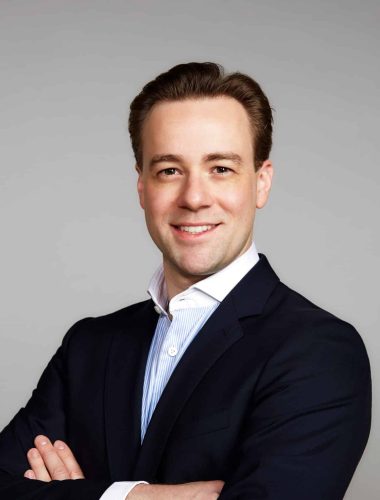
“Today, it is no longer enough to look only at rent. Asset management means continuously analysing a hotel’s performance and strategic positioning, creating transparency around its economic development and, where necessary, providing targeted impetus,” says Martin Schaffer.
Uncertain framework conditions increase the need for action
The economic environment remains challenging. Rising energy prices, geopolitical tensions and subdued consumer sentiment continue to shape market conditions. Rainer Singer describes the situation as follows: “We are operating in a highly dynamic environment in which framework conditions are changing almost daily.” With regard to monetary policy, the outlook remains open. “The longer the crisis continues, the more likely interest rate increases become,” says Singer. For asset managers, this means that strategies must be reviewed continuously and adjusted at short notice where required.
Key performance indicators point to growth — but at the expense of margins
A look at the portfolio analysed by mrp hotels, comprising around 20 hotels in the DACH region, illustrates the current trend: demand remains stable, while profitability is coming under increasing pressure. In the first quarter of 2026, occupancy rose by 2.3 percent year on year, while the average daily rate increased by only 1.0 percent. RevPAR, or revenue per available room, grew by 3.4 percent, driven primarily by higher occupancy.
“The focus was clearly on volume rather than rate. Guests have become significantly more price-sensitive,” explains Hannah Struck. At the same time, costs continue to rise. While GOPPAR, or gross operating profit per available room, developed positively at plus 3 percent, energy and labour costs continue to weigh noticeably on margins. Struck adds: “Profitability remains a key issue. In particular, the cost side is once again moving more strongly into focus given the current geopolitical situation and rising oil prices.”
Demand is shifting — flexibility becomes decisive
Demand for hotel rooms across all segments is not collapsing, but it is changing significantly. Travel is being planned at shorter notice, regional destinations are gaining in importance, while some international connections are coming under pressure. “We are not seeing a classic decline in demand, but rather a volatility booster,” says Henning Schneekloth-Plöger. “For asset management, this means that markets, target groups and distribution channels must be managed actively — and in much shorter cycles than before.”
Segment differences are becoming more pronounced
The development of the hotel market is increasingly segment-specific. “The budget segment is currently performing clearly better than traditional four-star hotels,” says Michael Schoppe. In a market environment characterised by cost and labour pressure, budget and economy hotels as well as serviced apartments with lean service structures are benefiting in particular. “By contrast, traditional full-service hotels are under significantly greater pressure than they were just a few years ago,” adds Schneekloth-Plöger.
Asset management is becoming more operational and more central
The demands placed on asset management are increasing significantly. In addition to strategic responsibilities, operational topics are moving more strongly into focus. “Hotels that are willing to adapt their concepts and become more operationally flexible are navigating the current environment far more successfully,” says Struck. At the same time, collaboration between owners and operators is becoming increasingly important. Transparency and regular dialogue are becoming decisive success factors, according to Schoppe. He emphasises: “A structured and open dialogue between owner and operator is indispensable today.”
Investment is necessary — but implementation remains challenging
Despite clearly identified areas for action, investments are often postponed, particularly in the field of energy efficiency. Christian Habermann sees this as a structural issue: “Especially in the current market phase, we frequently see economically sensible investments not being implemented because owners and operators are pursuing different interests. This makes it all the more important to think through measures jointly and develop partnership-based solutions. Only when both sides pull in the same direction can the economic potential of an asset be sustainably unlocked.”
At the same time, the industry remains in a state of constant adaptation. “We have been in crisis mode for years — and that forces us to become significantly more agile,” says Schneekloth-Plöger.
Conclusion: Asset management as an active value driver
“In an increasingly volatile market environment, active asset management is becoming the decisive value driver for hotel real estate. Rising costs, uncertain demand and structural shifts can no longer be absorbed passively. They require clear strategic decisions, operational interventions and close alignment between the interests of owners and operators. Today, asset management is the central lever for positioning hotels in an economically stable and future-proof manner. Success is no longer determined by market development alone, but by the quality of management,” Martin Schaffer concludes.
A recording of the online panel is available via the following link: https://www.linkedin.com/events/7451929363509391360?viewAsMember=true